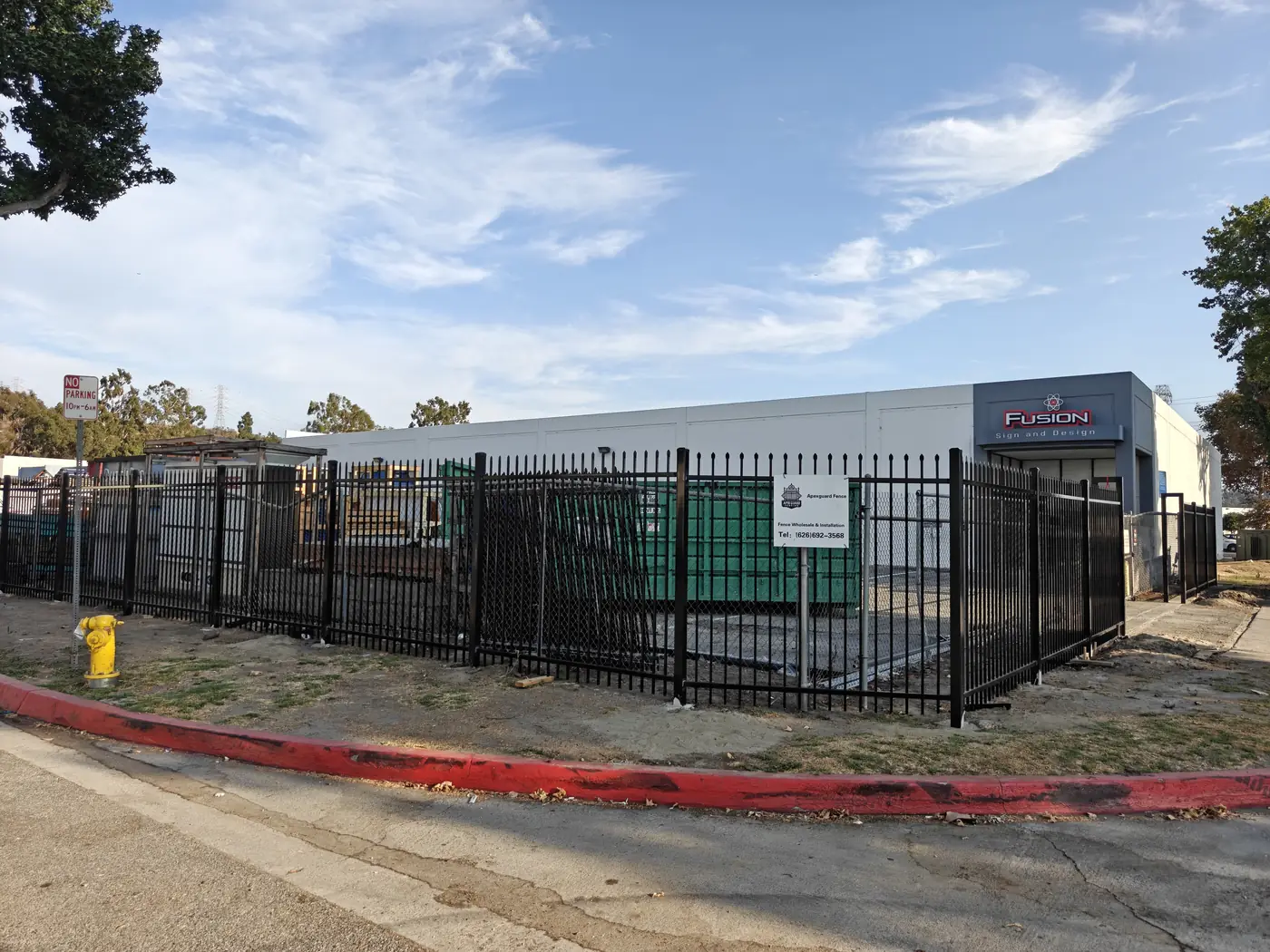
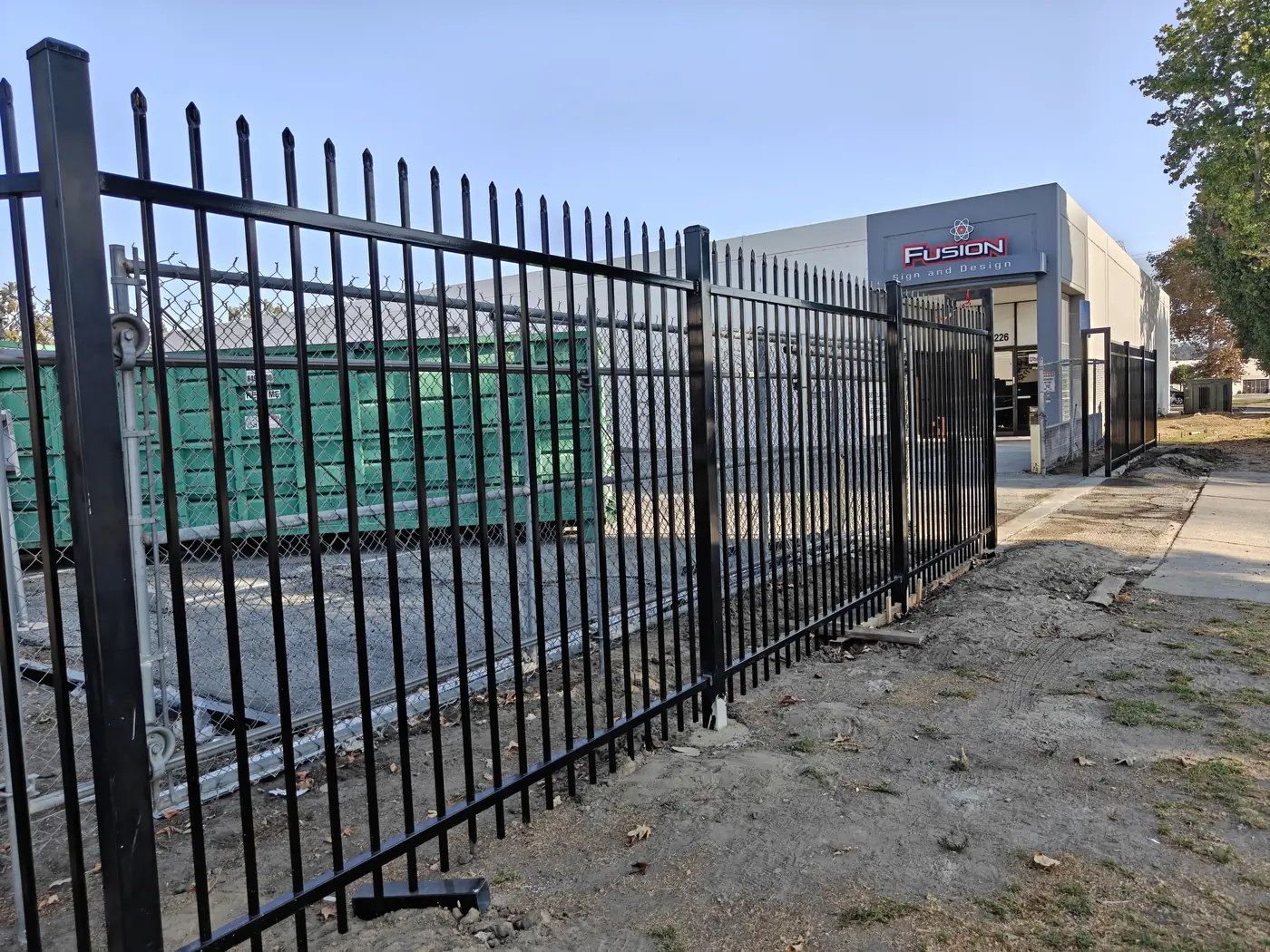
The build: 300 linear feet of 7 ft spike-top steel perimeter fence with two sliding gates — a 24-ft bi-parting slider and a 23-ft single slider — wrapping the street corner of a sign manufacturing facility in Whittier, CA.
The project
Fusion Sign & Design builds and installs signage nationally, and their Whittier facility works like most sign shops: an open yard behind the building holding steel, aluminum, cabinets, pallets and containers — all of it valuable, all of it sitting in the open on a corner lot with two street frontages. Stretches of the perimeter were open, and the driveway openings had nothing closing them after hours.
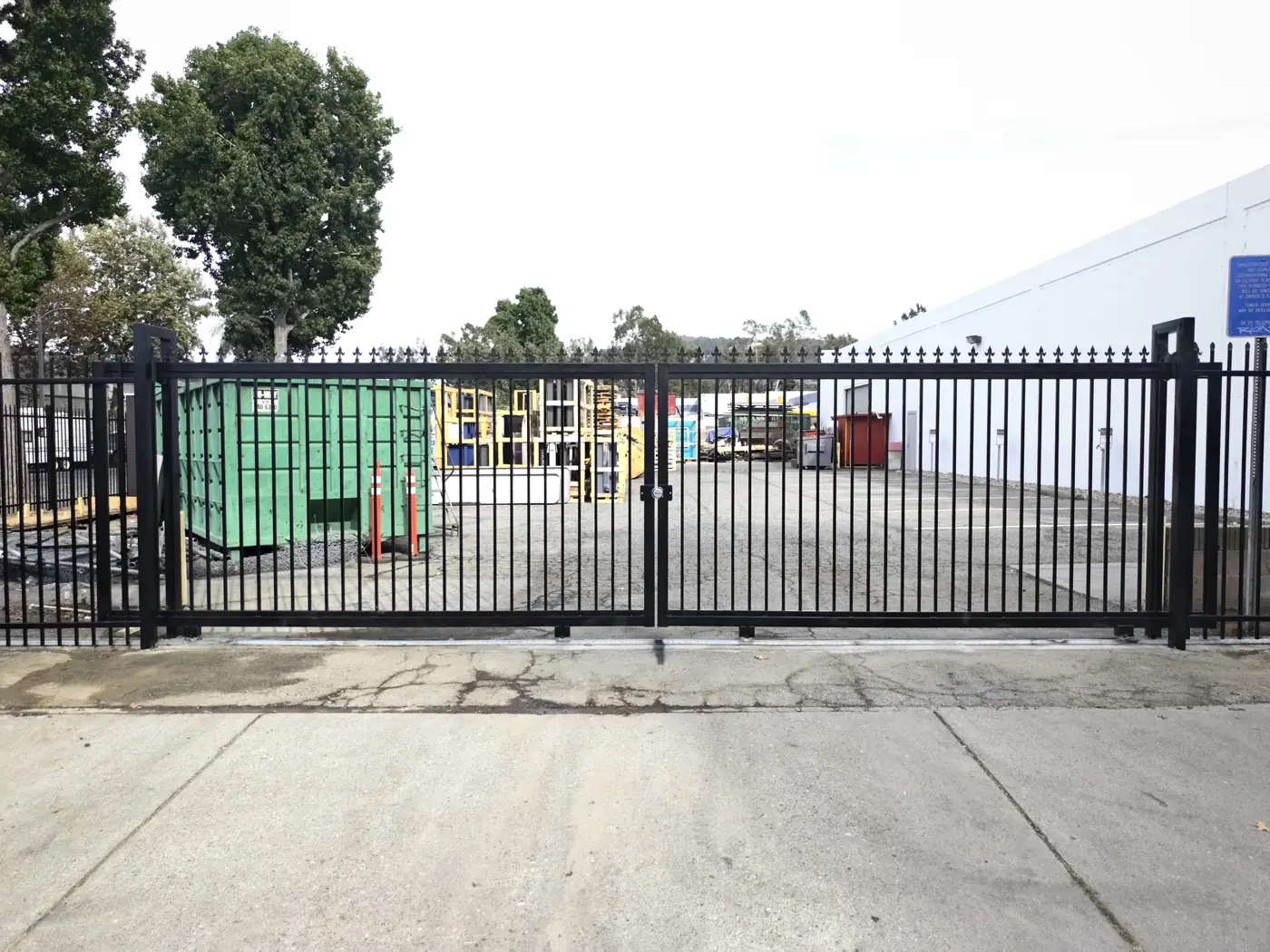
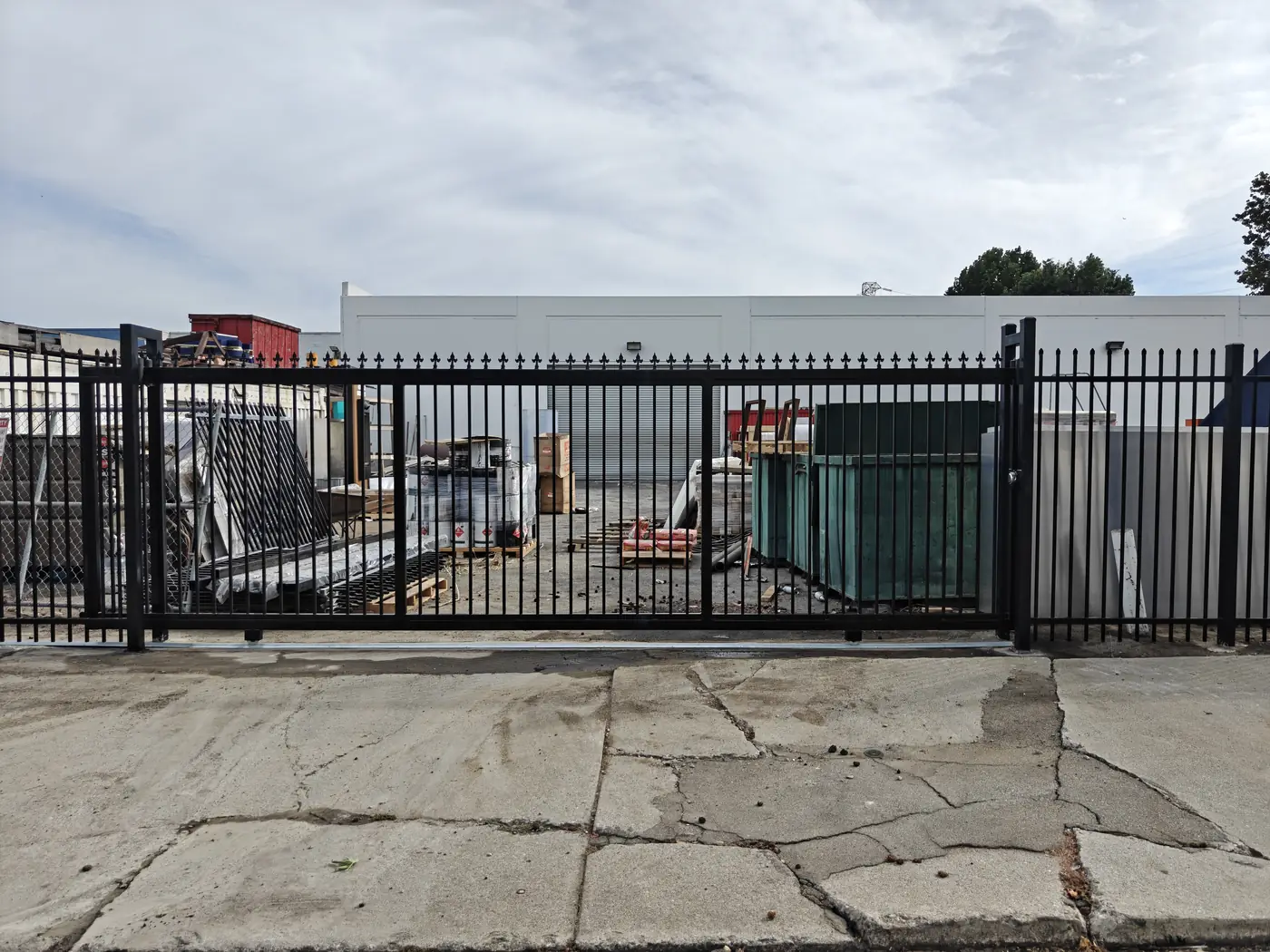
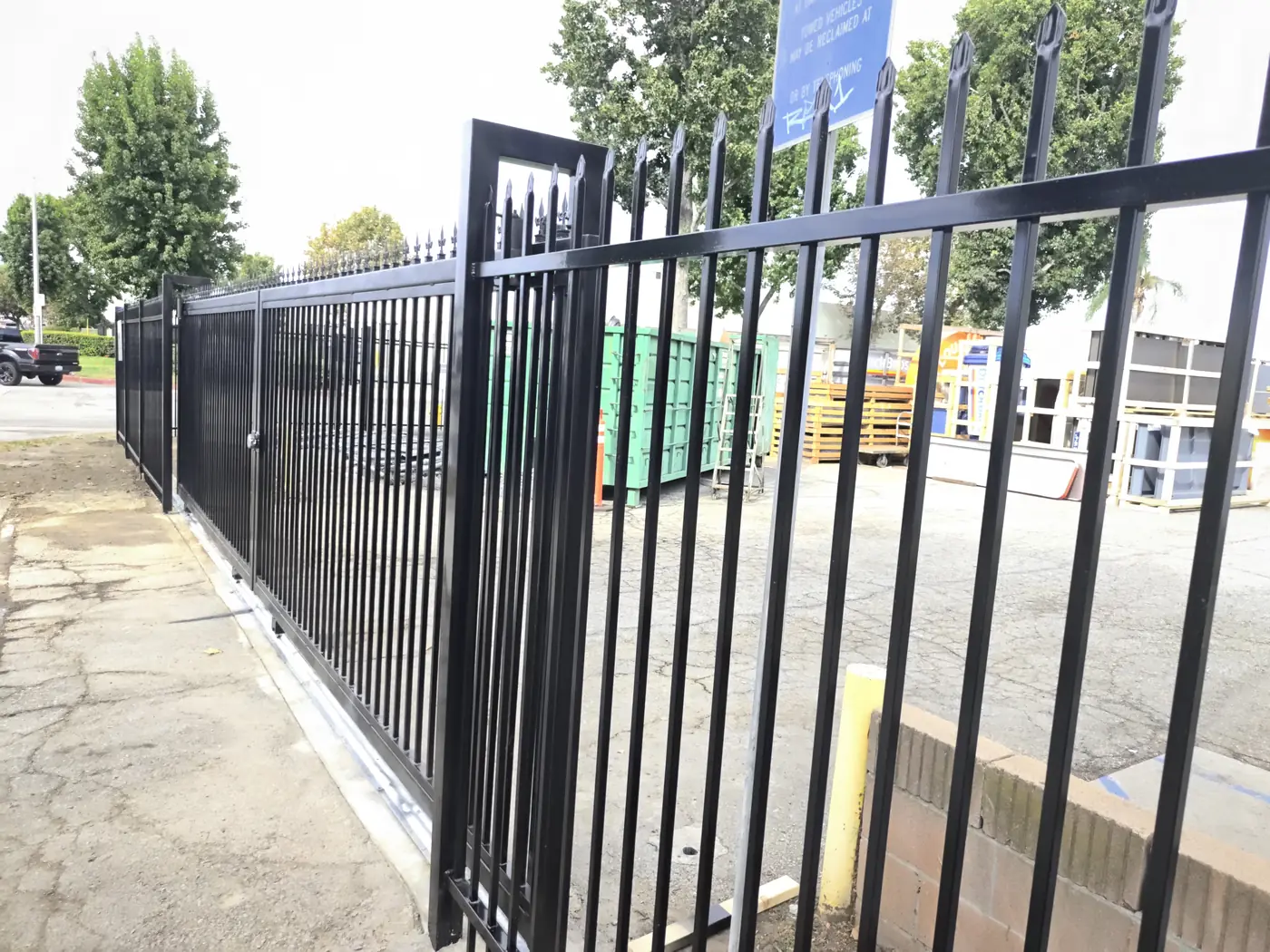
What they asked for was straightforward and what most commercial yards actually need: a fence tall enough to stop a casual climb, and driveway gates that close a wide opening without eating the yard. We built a 7 ft ornamental steel fence with spike tops around the perimeter, and closed two driveway openings with sliding gates on a steel track set into a poured concrete beam — the 24-ft opening bi-parted into two leaves that roll to opposite sides, and the 23-ft opening as a single leaf. Both gates are 7 ft tall, matching the fence line straight across.
- Location: Whittier, CA — commercial / industrial corner lot
- Client: Fusion Sign & Design, national sign manufacturer & installer
- Gate track: saw-cut asphalt, trenched run, steel track rail set with rebar, poured concrete beam troweled flush with the drive
- Fence: 300 linear feet of 7 ft ornamental steel, spike-top pickets, panels welded on site, black finish
- Gate 1: 24 ft × 7 ft bi-parting sliding gate (two 12-ft leaves rolling to opposite sides)
- Gate 2: 23 ft × 7 ft single sliding gate (one leaf, full-length track run)
- Gate build: frames fabricated and welded on site, cast fleur-de-lis finials, shielded lock box
- Schedule: six working days — about 50 linear feet a day including the concrete work and both gates — yard stayed operational throughout
Stage 1 — the concrete gate track
A rolling gate carries its whole weight on wheels riding a steel track in the ground. That means the track is the gate: if it is straight, level and rigid, the gate rolls with one hand for twenty years; if it moves, the gate binds, jumps its rollers, or stops meeting in the middle. So the track went in first, and it went in properly.
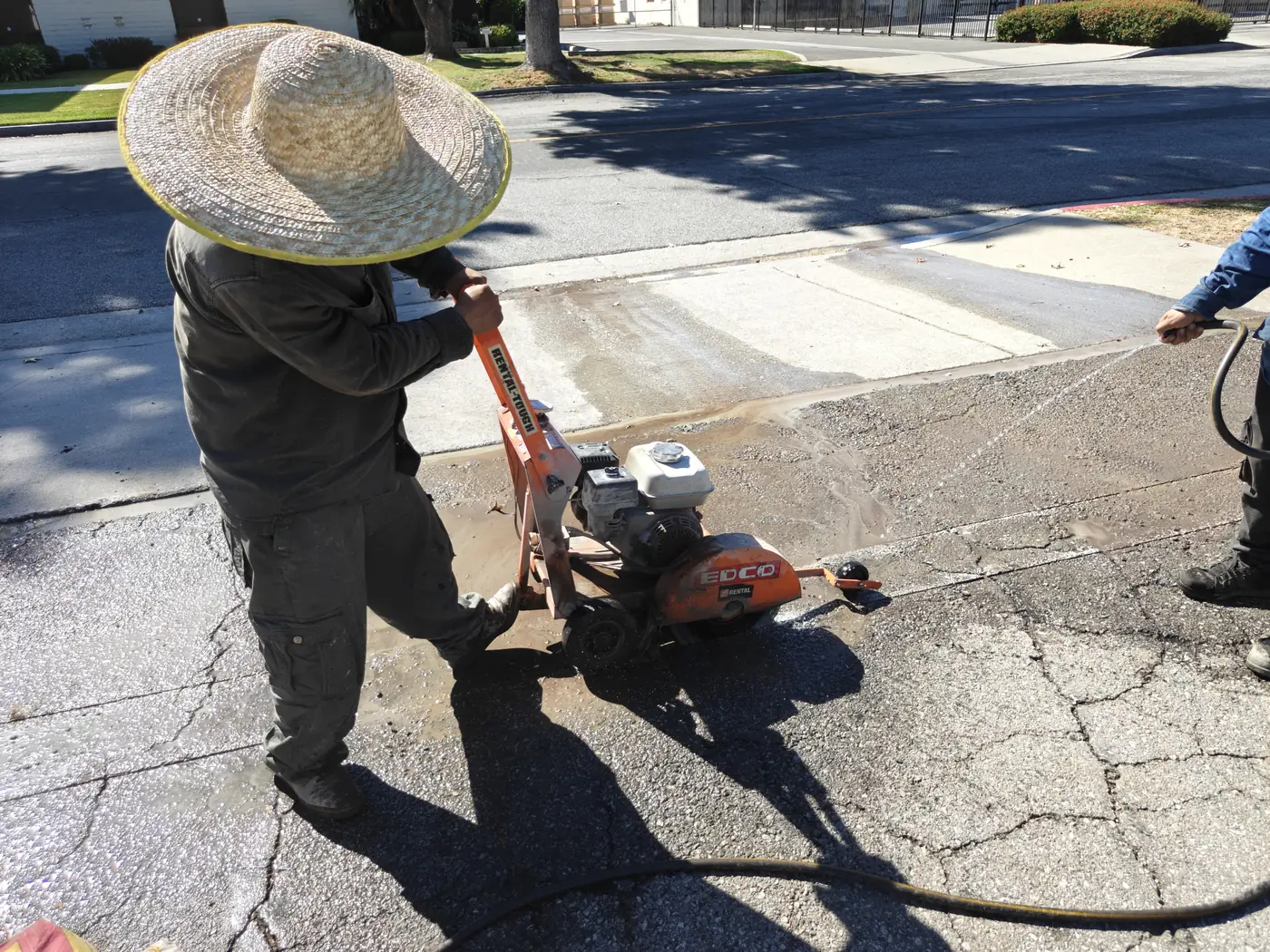
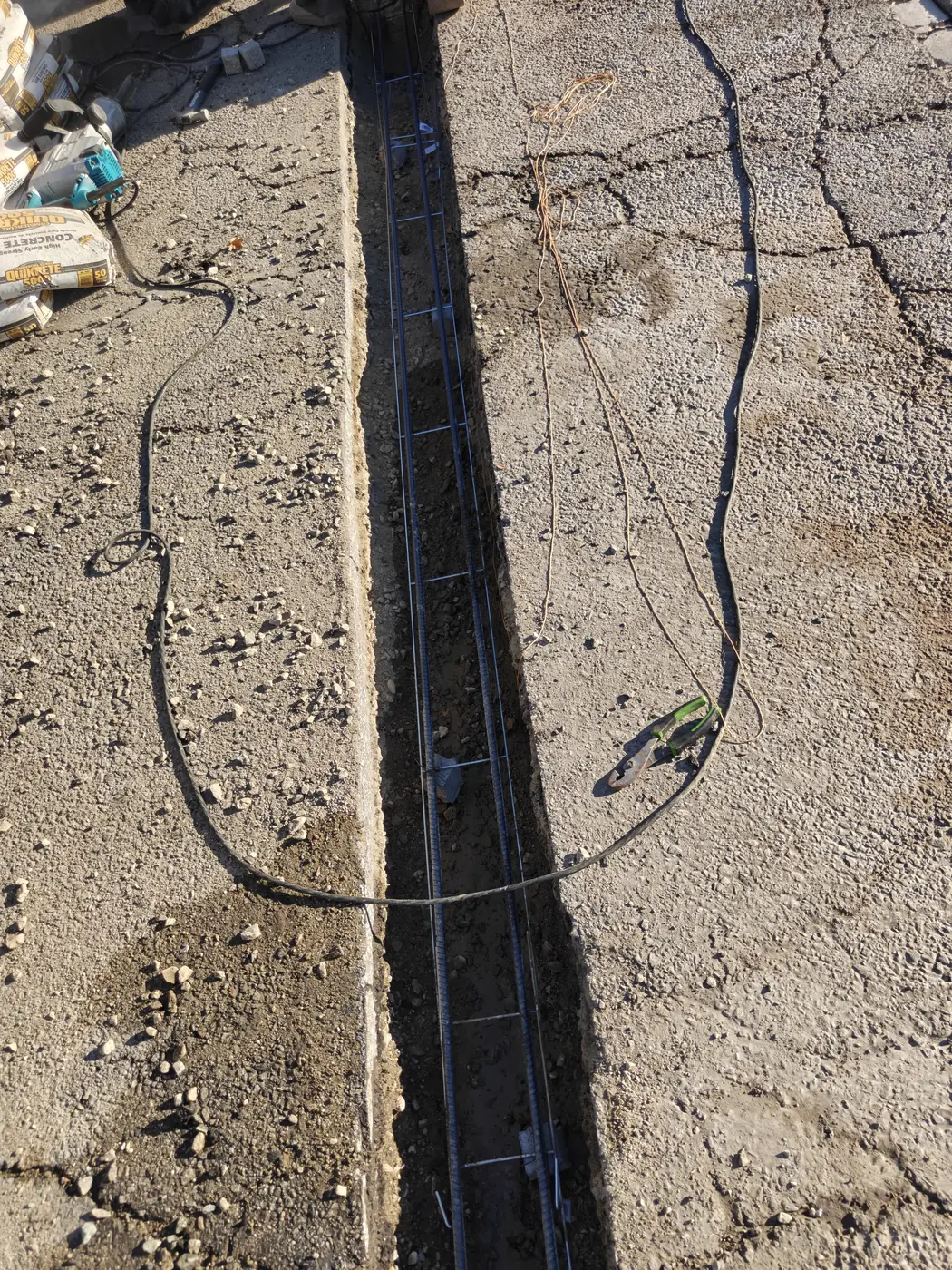
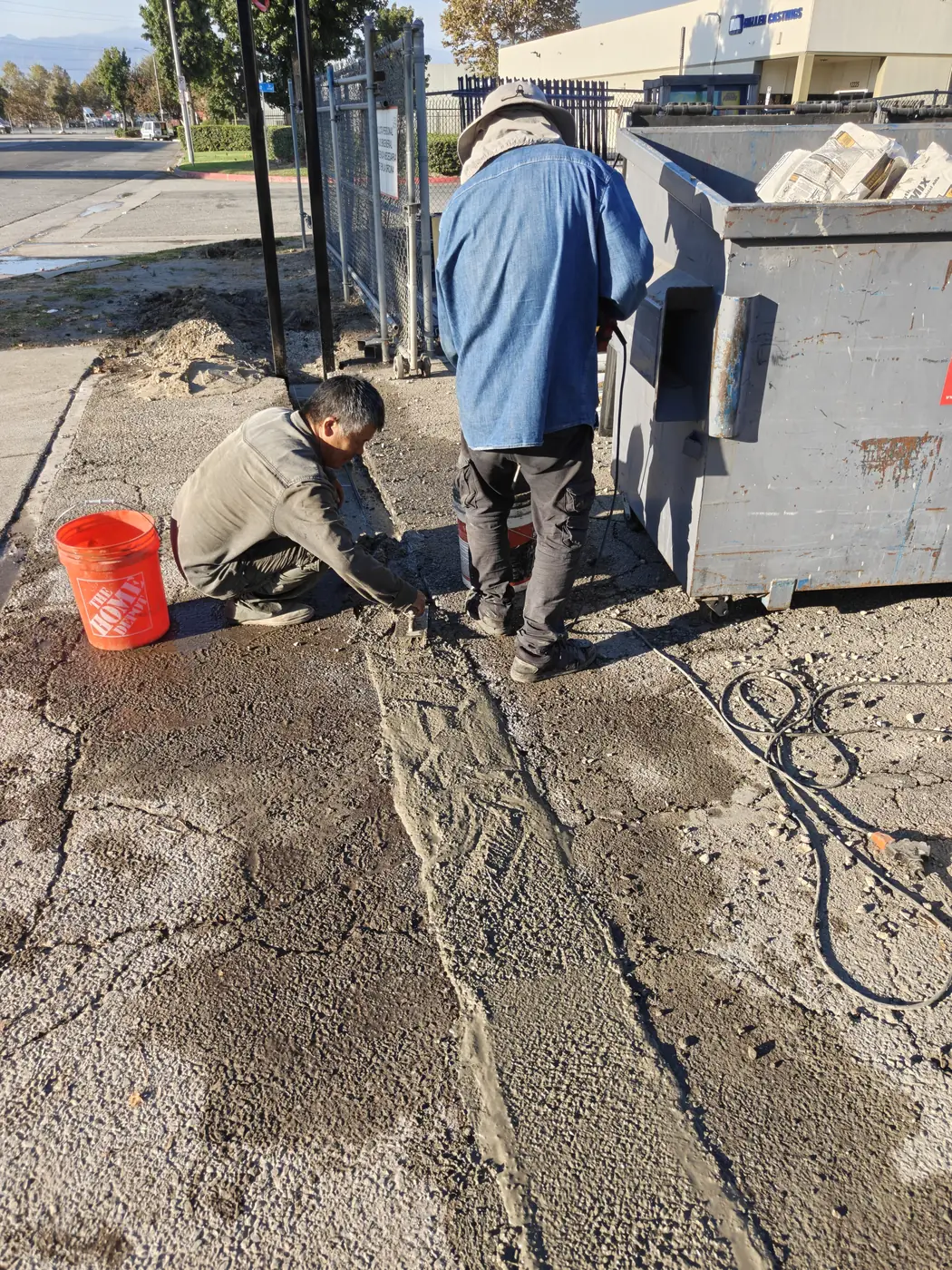
We saw-cut the old asphalt along the full gate run, trenched it out, set the steel track rail in the trench with rebar tied along its length, then poured a high-early-strength concrete beam around it and troweled it flush with the driveway. Flush matters on a working yard — forklifts, pallet jacks and delivery trucks cross that line all day, and a raised track is something to catch, trip over, and eventually shear off.
Bolting a track down onto old asphalt is the shortcut, and it is why so many commercial slide gates are dragging within a year or two. Asphalt settles, heaves in the heat, and cracks under load. Concrete tied to rebar does not.

Stage 2 — 7 ft spike-top steel fence
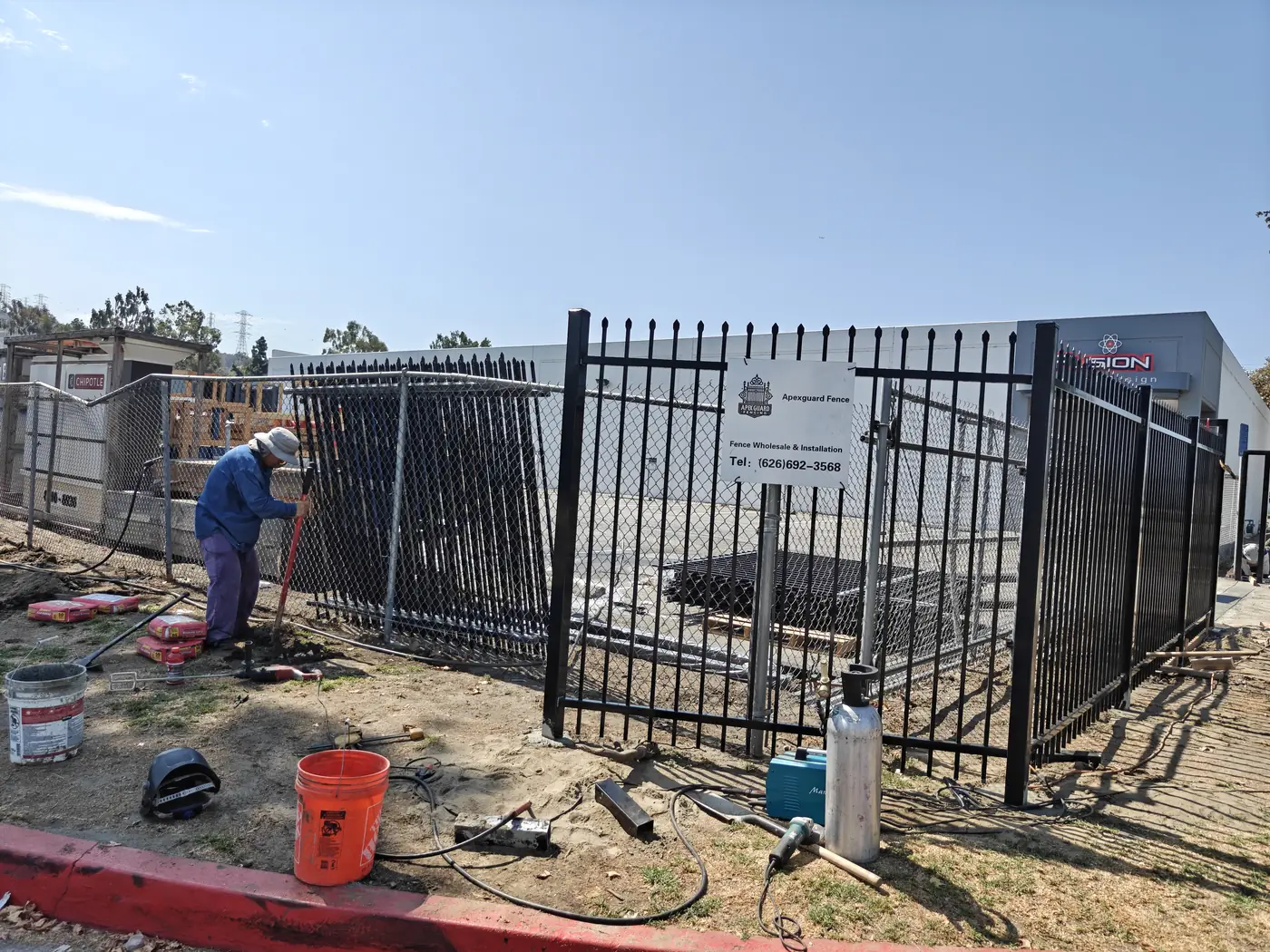
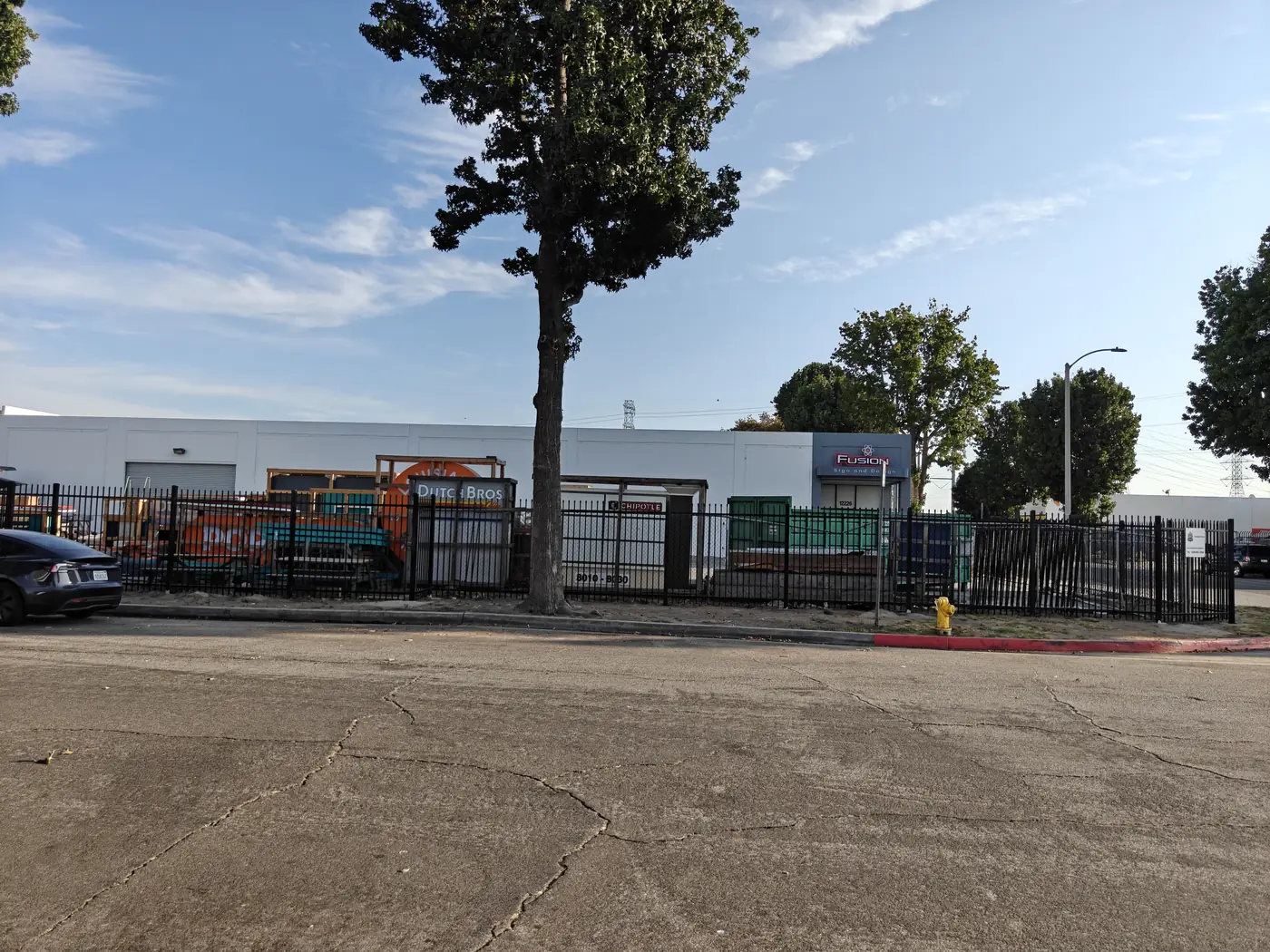
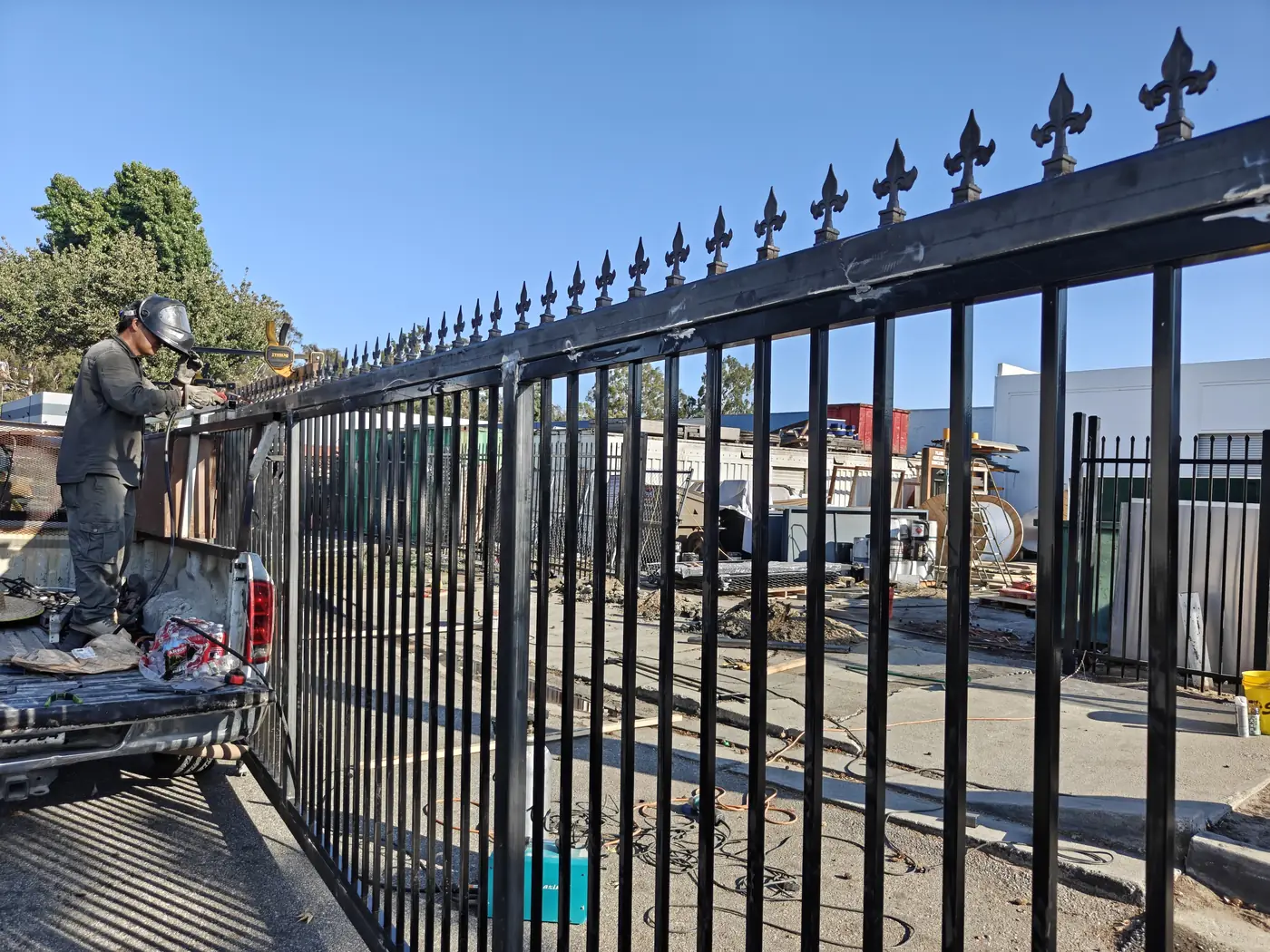
With the track curing, posts were set and 300 linear feet of 7 ft panels welded up along the perimeter. Seven feet with spike tops is the sweet spot for a commercial yard: it is well past the height anyone climbs casually, the spike tops give nothing to grab or stand on, and unlike a solid wall it keeps the yard visible from the street — which both patrol officers and the client's own cameras care about. Vertical pickets also stay honest over long runs; there are no horizontal rails to use as a ladder.
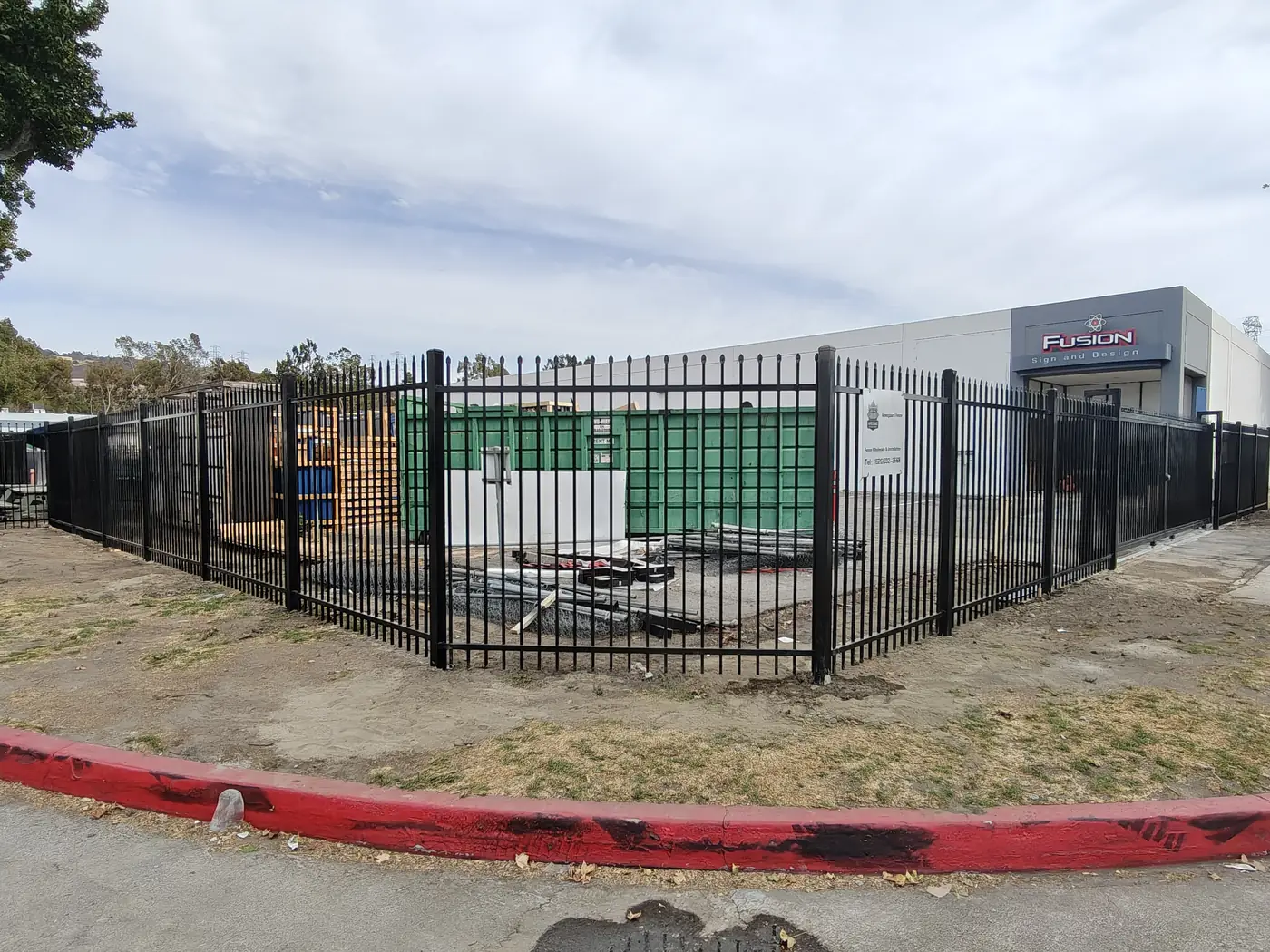
The fence wraps both street frontages and returns along the building, so the whole yard — containers, pallet racks, finished sign cabinets — sits inside one closed line. Panels were welded on site rather than bolted, and the top line was kept straight across a lot that drops slightly toward the street.
Stage 3 — two sliding gates: 24 ft bi-parting and 23 ft single
Both driveway openings are sliders, and on a wide commercial opening that beats a swing gate on every count — no swing arc eating yard space, and nothing to drag on a sloped or cracked drive. But the two openings got two different configurations, and the reason is worth understanding if you are planning your own.
A sliding gate has to park its leaf somewhere. A single slider needs roughly its own width again in clear fence line beside the opening — a 23-ft leaf wants about 23 more feet of run to sit on, plus track to carry it. Bi-parting splits the opening in two, so each leaf only needs about half that run. So we built the 24-ft opening as a bi-parting gate — two 12-ft leaves meeting at a center stop, each rolling to its own side — and the 23-ft opening as a single 23-ft leaf, where there was clear fence line to run it along. Both are 7 ft tall, so the top line reads straight across gates and fence together.
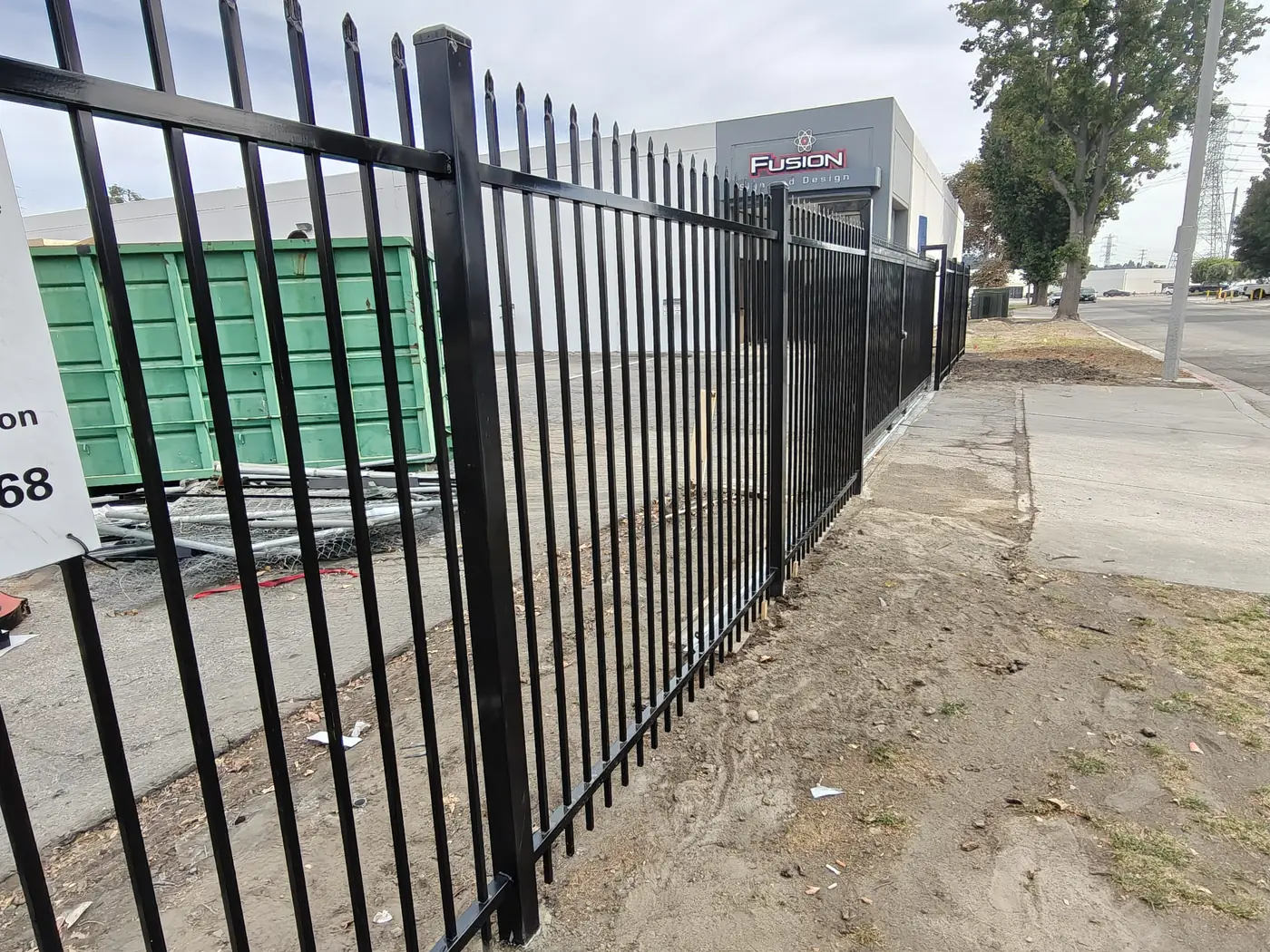
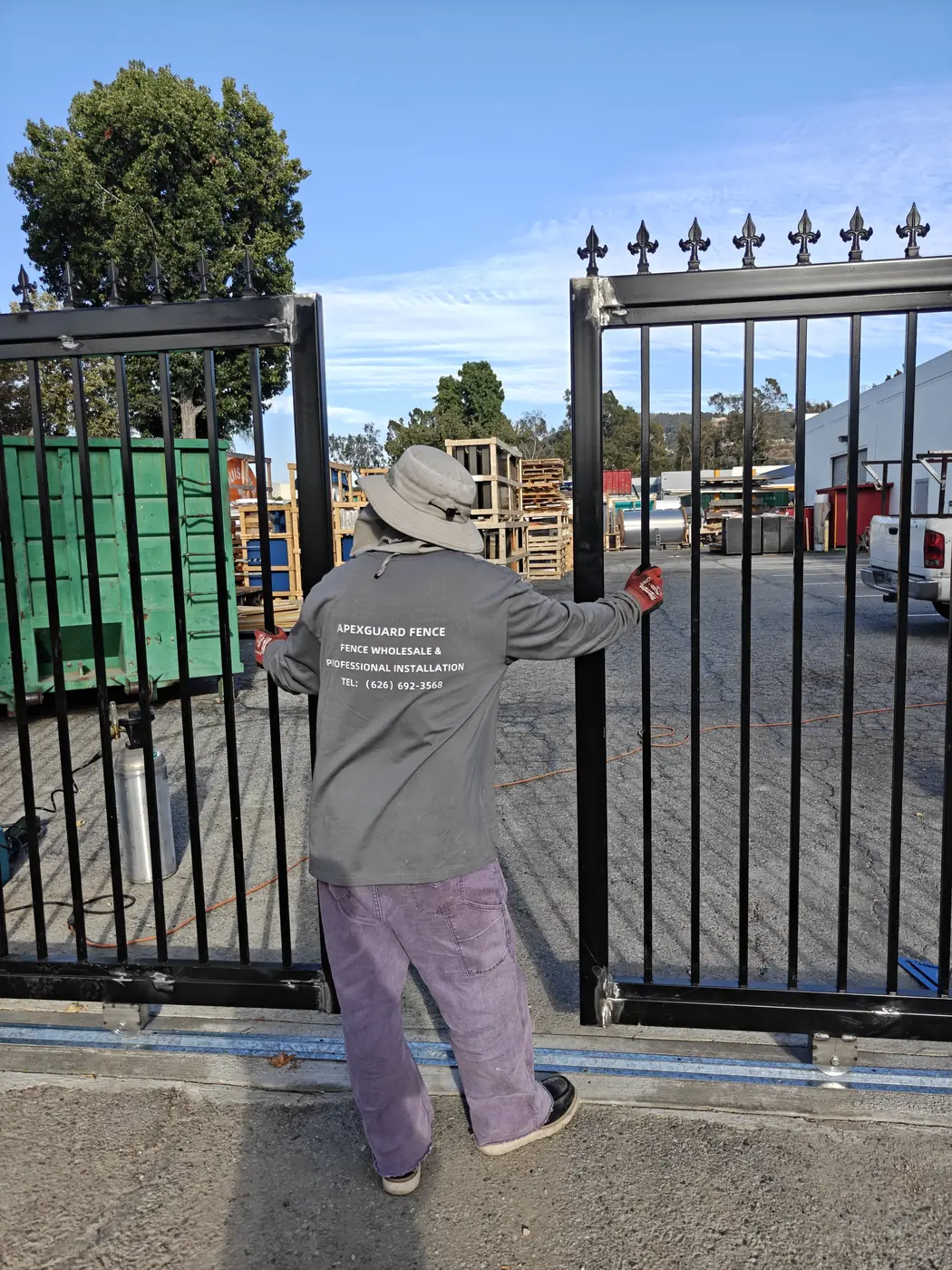
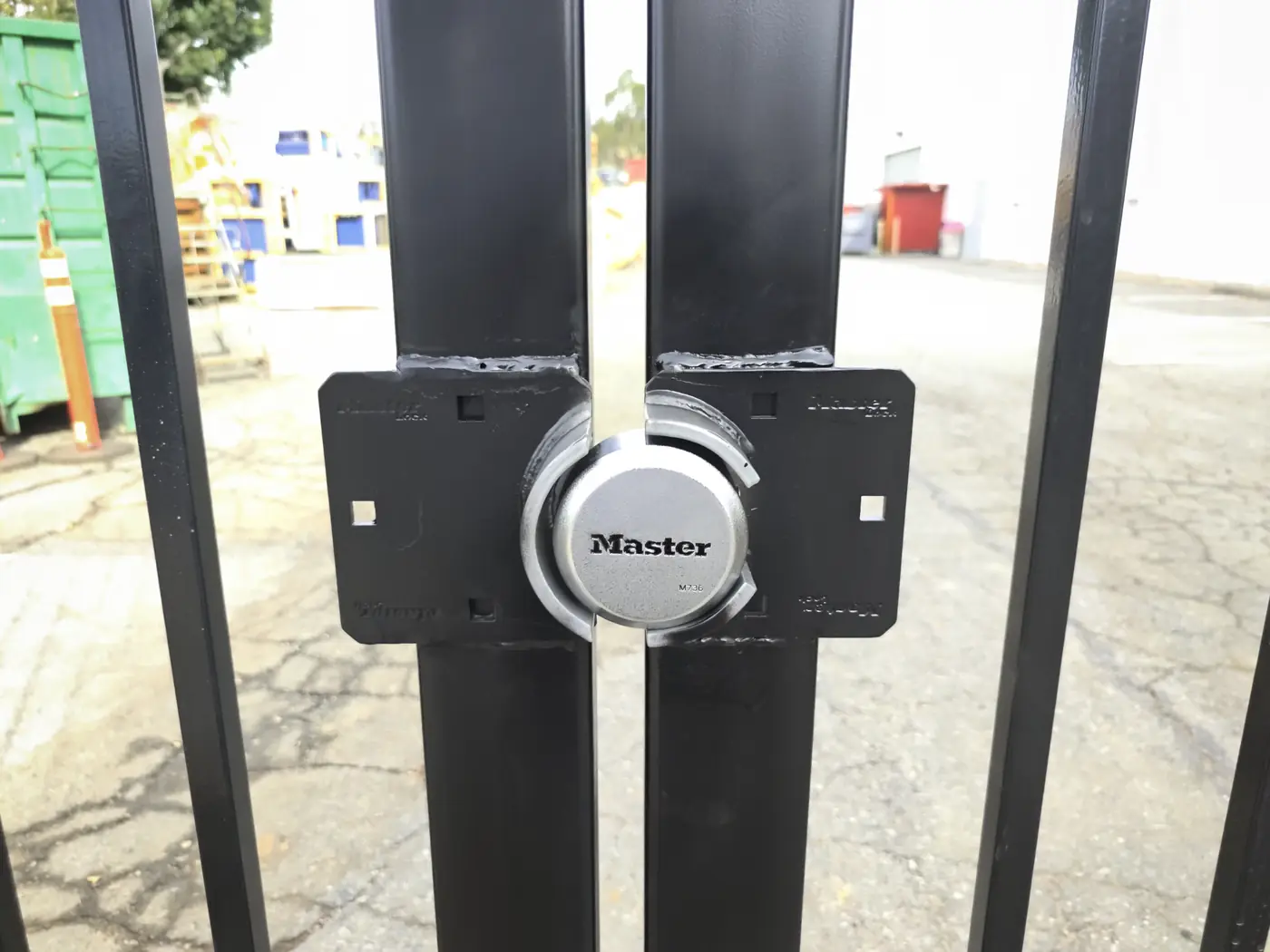
Frames were cut, squared and welded on site so each leaf was built to the opening as it actually measured. Each carries the same 7 ft picket infill as the fence with cast fleur-de-lis finials along the top rail, rides on rollers set to the poured track, and closes onto a shielded lock box so a padlock can't be reached with bolt cutters from outside.
Gates are always the weak point of a commercial perimeter — the only part that moves, and the only part staff touch every day. Building them square, to the real opening, on a track that will not move is the whole job.
What a commercial yard should ask for
If you run a yard, a shop, a contractor storage lot or a fleet property in Whittier or anywhere in southeast LA County, the specification that actually holds up looks like this:
- 7–8 ft ornamental steel with spike tops — hard to climb, nothing to grip, still visible for cameras and patrols.
- Sliding gates, not swing gates, on any wide opening — no swing arc to keep clear, no dragging on a sloped drive.
- Bi-parting when you're short on fence line beside the opening, single-leaf when you have the run — measure the parking space before you pick.
- A poured concrete track with the rail set in it, troweled flush — not a track bolted to old asphalt.
- Welded panels rather than bolted brackets on the runs that face the street.
- Gates built to the measured opening, with a shielded lock box.
- A licensed contractor with real insurance — most commercial and property-management clients need a certificate before anyone starts.
Installed ornamental steel fencing in Whittier generally runs about $50–$100 per linear foot, with commercial work toward the upper end once height and heavier sections are included. Sliding gates are priced per opening, and the concrete track work is quoted separately since it depends on the surface and run length. Ballpark it with the online estimate, then confirm with a free on-site measurement.
Built in Whittier
This project was built in Whittier, CA, for the Whittier facility of a national signage contractor. Apexguard Fence is a licensed (CSLB #1148097), bonded and insured fence and gate contractor working across Whittier, La Puente, Santa Fe Springs, City of Industry and the rest of southeast Los Angeles County. We are set up for commercial and contractor work — certificates of insurance, Procore and The Blue Book — and we hold 5.0 stars across 30 Google reviews.
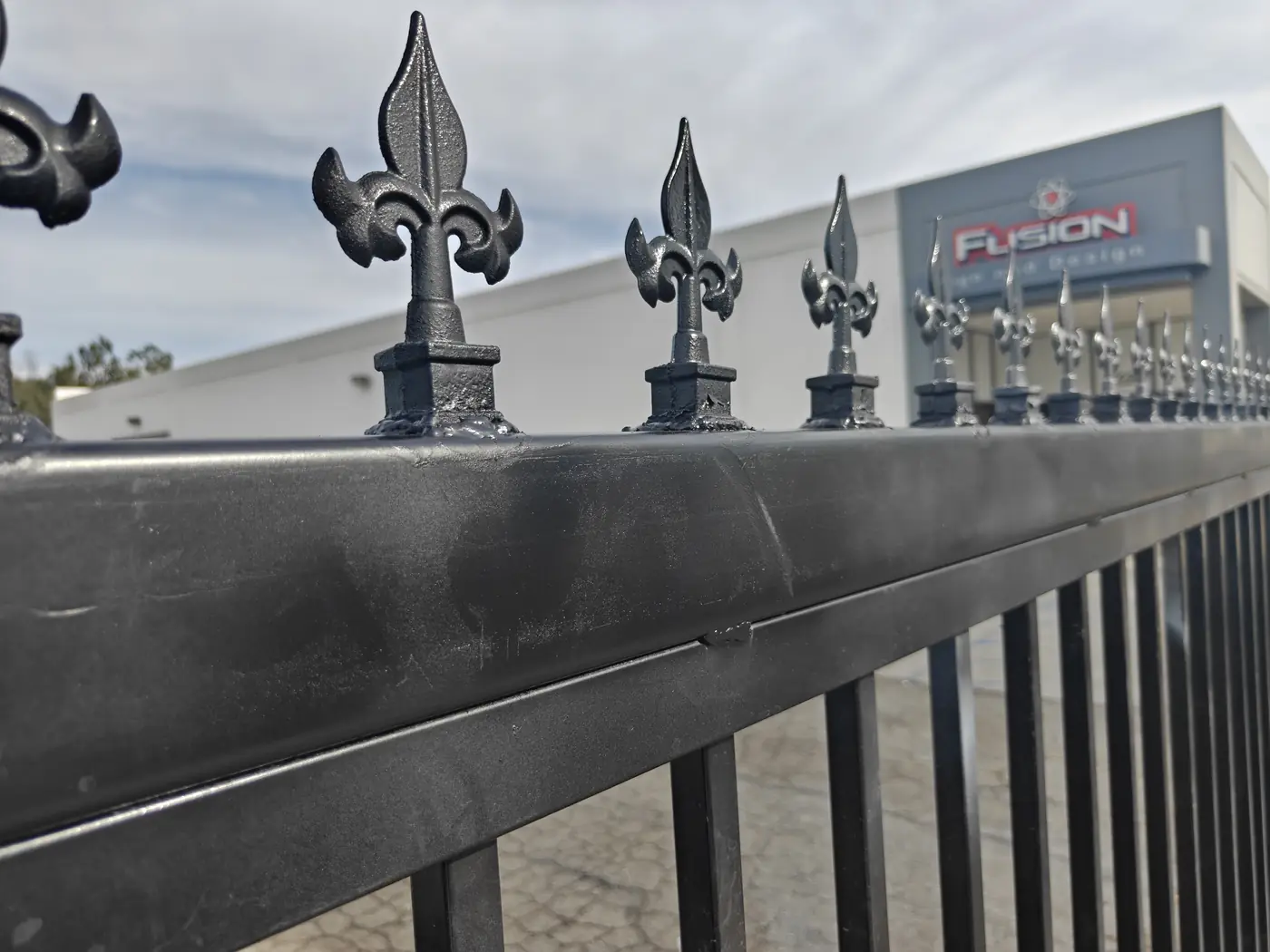
Detail: cast fleur-de-lis finials on the gate top rail, spike-top pickets down the run — Whittier, CA.
Project FAQ
Sliding gate or swing gate for a commercial driveway?
Sliding, in most commercial yards. A swing gate needs a clear arc inside the property — on a wide opening that arc eats parking or staging space, and any slope or cross-fall makes the leaf drag. A sliding gate travels along the fence line instead, so it needs no swing room, it is not affected by grade inside the yard, and it can span a much wider opening. This Whittier project has one of each configuration: a 24-foot bi-parting slider and a 23-foot single slider, both 7 feet tall.
Bi-parting or single sliding gate — how do you choose?
It comes down to how much clear fence line you have beside the opening. A single sliding gate has to park its whole leaf somewhere, so a 23-foot leaf needs roughly 23 more feet of clear run alongside the opening — plus the track to carry it. Bi-parting splits the opening into two leaves that roll to opposite sides, so each one only needs about half that run. On this Whittier yard we built both: the 24-foot opening was bi-parted into two 12-foot leaves, and the 23-foot opening runs as a single leaf where there was clear fence line to park it on. Both gates are 7 feet tall to match the fence.
Why does a sliding gate need a poured concrete track?
A rolling gate carries its weight on wheels that ride a steel track in the ground, so the track has to stay dead straight, level and rigid for the life of the gate. Bolting that track onto old asphalt does not last — asphalt settles, heaves and cracks, and once the track moves the gate binds, jumps its rollers, or stops latching. On this Whittier project we saw-cut the asphalt along the gate run, trenched it, set the steel track rail with rebar, and poured a high-early-strength concrete beam around it, troweled flush with the drive so trucks pass over it without catching.
How tall can a commercial security fence be in Whittier?
Industrial and commercial yards in Whittier commonly run 6 to 8 feet of perimeter fencing, and 7 feet with spike tops is a popular middle ground: tall enough to defeat a casual climb, short enough to avoid the extra structural and permitting scrutiny that very tall fencing can trigger. Height limits depend on the zone and how close the fence sits to the street, so we confirm the requirement with the city before fabrication.
How much does commercial fencing cost in Whittier, CA?
Installed ornamental steel fencing in Whittier generally runs about $50 to $100 per linear foot, and commercial work sits toward the upper end once you add height and heavier picket and rail sizes. Sliding gates are priced per opening by clear width, leaf weight and hardware, and the concrete track work is quoted separately because it depends on the surface, the run length and how much saw-cutting and demolition is involved. Apexguard Fence provides a firm written quote after a free on-site measurement.
How long does a commercial perimeter fence and sliding gate take to install?
Six working days for 300 linear feet of 7-foot fence plus two sliding gates — a 24-foot bi-parting slider and a 23-foot single slider. That is roughly 50 linear feet a day with the concrete work and both gates included. The concrete gate track went in first so it could cure while the crew moved on, then posts and 7 ft fence panels, then the sliding gate frames — fabricated and welded on site — set onto the track and adjusted last. Sequencing the concrete first is what keeps a job like this to one continuous week, and the yard stayed operational throughout.
Do you build commercial fences and gates for national contractors?
Yes. This Whittier project was built for Fusion Sign & Design, a national sign manufacturer and installer, at their Whittier, CA facility. Apexguard Fence is licensed (CSLB #1148097), bonded and insured, and is set up for contractor and property-manager work through Procore and The Blue Book, including same-day certificates of insurance.
Need a yard, shop or fleet lot secured? Call Apexguard Fence at (626) 692-3568 for a free on-site measurement and a written quote, or ask us for a certificate of insurance first — we send it same day.